Most people hear “alarm panel” and think intrusion at night or life safety. That’s normal—those are the legacy use cases. But as Steve, Brad, and Tom explain in their discussion of Radionix solutions, panels (and the devices connected to them) have gotten smarter, and that opens the door to a different kind of value: solving everyday problems that cost organizations money, create headaches, or introduce risk—often without adding much hardware at all.
Their central point is simple and empathetic: many issues aren’t caused by “bad intent.” They’re caused by busy people, routine shortcuts, equipment quirks, and facilities that never sit still. The panel can act like a quiet operations assistant—monitoring conditions, nudging staff when something’s off, and escalating only when necessary. Watch their discussion here >>
The mindset shift: what can the panel do when it’s not “armed”?
A key moment in the conversation is the question: What can these panels do for you when they’re not in an armed state? That’s where the “Seriously Protective” concept comes alive.
Instead of thinking only in terms of alarms that call a central station, the panel can be configured to:
- Monitor status (open/closed, motion, equipment conditions)
- Apply a time rule (“if this stays open longer than X minutes…”)
- Notify the right people (keypad annunciation, app push notifications)
- Trigger related systems (camera analytics, IP speakers/horns, software events)
The result is a tool that can help manage the “gray area” problems—those not serious enough to be a police dispatch, but serious enough to damage operations.
Door propping and “is that door actually closed?”
The first example they explore is incredibly relatable: doors that get propped open during the day.
Someone steps out, puts a brick at the door, and returns through another entrance. Now a door is unsecured and no one realizes it. With a simple door contact tied into the panel, you can continuously monitor the door’s status—even during school or business hours.
The practical value is in programmable timing and alerting:
- If the door is open longer than a set time (seconds or minutes—based on what makes sense operationally), the system can alert.
- That alert can go to a manager or multiple staff members so someone can respond fast.
And the discussion highlights a broader point: an open door isn’t only a “security” issue. In environments like food production, an open door can mean pests or contamination—leading to spoiled product, wasted time, and real financial loss. A low-cost contact, programmed intelligently, can protect both security and quality control.
Off-hours (unattended) deliveries: using disarm/re-arm to control camera analytics and audio warnings
They then move into a more “systems” example: retail stores or warehouses receiving deliveries at night or early int he morning when staff aren’t present.
Here, the panel becomes a workflow trigger:
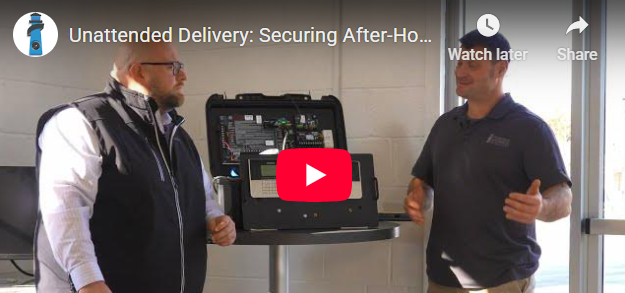
- When the delivery person enters and disarms the panel, that de-action can activate camera analytics covering the delivery area.
- The camera uses a virtual boundary—a defined area where the delivery person should not enter.
- If the person enters an area they shouldn’t, the keypad can enunciate and the system can integrate with an IP speaker or IP horn to play an audio message to provide instructions.
- Once the person leaves and re-arms, the analytics can automatically turn off again.
This is a great “Seriously Protective” example because it’s not a traditional alarm event. It’s controlled awareness: watch closely only when it matters, and use audio prompts to correct behavior in real time.
Overhead doors: stop losing heat (or A/C) through operational drift
One of the most human stories in the discussion is about a customer whose overhead bay doors get left open—constantly. It’s winter, it’s cold, and heating costs are climbing. The owner walks into the warehouse and finds overhead doors are up. Nobody’s doing it on purpose; it’s just happening. The owner wanted one simple outcome:
“Tell me if the overhead door is open for more than five minutes.”
That’s it. If it’s open too long, the panel sends a notification—even if the owner is offsite—so they can call the team and get it closed. And if the system includes cameras in the app, they can visually verify what’s going on before they respond.
This theme repeats throughout the conversation: small notifications, big savings—especially when energy costs are high.
Schools and public events: protect “only these areas” without creating a full alarm incident
The conversation then shifts to schools—an environment where “partial access” is common.
A school may open the auditorium or gymnasium to the public for a special event. The challenge: how do you keep people from wandering into other areas like classrooms, offices, storage, music rooms, or workshops?
Their answer is a practical, measured approach:
- Use motion detectors or door contacts to detect activity in restricted areas.
- Don’t treat it like a full central-station dispatch alarm.
- Instead, notify on-site staff (there’s typically always an on-duty person) so they can respond.
This is an important distinction: the panel can support situational access control—not by locking everything down, but by giving staff awareness and a way to respond before vandalism, theft, or damage occurs.
Bus lane management: analytics detect “car vs. bus” and push a notification
They also mention a smart “software integration” style application: bus lanes.
With a camera that can use analytics to distinguish a car from a bus, the system can detect when a car is parked or driving where it shouldn’t be—before the buses arrive. That analytic event can trigger a point on the panel (not a physical contact—software integration), which then generates a push notification so staff can address the issue proactively.
This expands the theme: “inputs” don’t have to be wired sensors anymore. They can be events from other systems.
Cold storage, coolers, and greenhouses: protect product from equipment quirks
Two more examples land squarely in operations and loss prevention:
Freezer/cooler roll-up door malfunction
A facility had an automatic roll-up door activated by a forklift being nearby that would fail to close periodically—every 5th or 10th cycle. The issue wasn’t obvious in the moment, but it could ruin perishables. A simple alert on “door open too long” can prevent product loss.
Greenhouse roof vents not opening (heat damage)
A florist had automated roof openings designed to vent heat above a threshold. When the system didn’t operate correctly, plants were getting burned—right before a critical selling season (they mention Mother’s Day). Monitoring that condition and alerting the owner helps protect inventory and revenue.
These examples reinforce the campaign’s message: the panel can help guard against the kind of quiet failures that are expensive precisely because they’re easy to miss.
The “Seriously Protective” pattern: reminder first, escalation second
They repeatedly emphasize that most of these scenarios aren’t about punishing people—they’re about reminding them:
- “Door’s been open for X minutes—can you close it?”
- “You’re parked where you shouldn’t be—please move your car.”
- “Restricted area—return to the delivery zone.”
And that’s where integrated audio becomes powerful. The panel can:
- beep at the keypad,
- send a push notification,
- and, when appropriate, play a message through an IP speaker/horn.
You can keep it light-touch, but still effective.
Why this resonates: it’s often the cheapest way to solve expensive problems
A quiet but important point they make: if you already have the panel, many solutions are just:
- adding a contact or a point, and/or
- programming rules and notifications differently.
Sometimes you might add an IP speaker or integrate a camera analytic event—but often the foundation is already there. That makes the ROI story easy: small adjustments can prevent recurring losses and constant frustration.
What next?
Their final takeaway is the best “Seriously Protective” question to ask:
What’s driving you crazy in your facility right now? Not “what alarm features do you want?”—but what recurring, costly, annoying problem needs a simple, reliable nudge.
If you have a challenge like that, reach out to support@midches.com.