

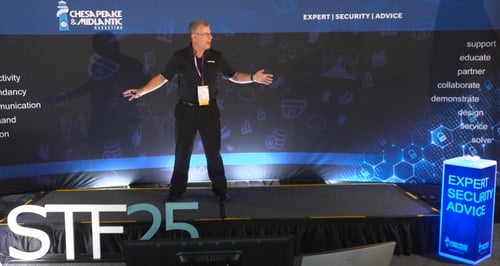
Tom Mechler’s core message from his presentation at the 2025 Security Technology Forum was simple: most facilities already own a “sensor network” in their intrusion system, and they can use it for daily safety and operational efficiency, not just “catch the burglar at night.”
Bosch and Radionix intrusion panels are already watching doors, motions, and inputs all day long. If you treat those points as intelligence you can act on, you can solve common problems like propped doors, misused emergency exits, blocked egress paths, shrink at high value counters, and even food spoilage, often without adding brand-new subsystems.
He walked through a set of practical use cases that apply across verticals (retail, schools, banks, offices). For example, a perimeter door contact used for burglary at night can also be configured during the day to alert if a door is held open too long, similar to “door propped” in access control. Emergency exit doors can trigger a local siren while the system is disarmed, stopping “dine and dash” behavior or preventing kids from wandering out. He also highlighted tying video analytics into intrusion: a camera can detect an “object left behind” (like pallets blocking an emergency exit), then trigger an intrusion point so the panel can send texts, local alerts, or escalation actions. The theme throughout was “use what you already have,” then integrate systems so events become actionable.
Key ideas and examples Tom shared
-
Door held open / propped door alerts (even without access control on that opening): Use panel features like monitor delay/delay response to time how long a door stays open while disarmed, then trigger local alerts or notifications.
-
Emergency exit misuse protection: Program emergency doors to sound locally during normal hours without generating a central station dispatch, discouraging misuse while keeping egress available.
-
Blocked emergency exits (code and safety): Use video analytics to detect objects left in front of exits and trigger intrusion events that notify managers before fire marshals, citations, or worse.
-
HVAC and energy loss at loading docks: Time overhead doors differently than man doors (for example, forty five minutes vs two minutes) and notify someone when doors are left open beyond policy.
-
High value merchandise shrink reduction: Put contacts on drawers/cabinets at jewelry or high value storage and alert if left open past a short timer.
-
Food safety and loss prevention: Tie freezer/temperature alarms into the intrusion panel so alerts reach people who can respond even when nobody is onsite.
-
Loitering detection with staged response: Let cameras detect people lingering after hours, trigger the intrusion system, play a deterrent message first, then escalate if they remain.
-
Partitioning/areas for smarter arming: Arm/disarm up to 32 areas independently so managers, assistant managers, and staff get access that matches responsibilities (example: bank vault stays armed until you are at the vault).
-
Panic buttons + “custom functions”: One activation can simultaneously notify monitoring, initiate lockdown/door locking via relays, and broadcast a pre-defined message.
Remote management update
He announced a new mobile app: Remote Security Manager, replacing the Bosch Security Manager app. He emphasized multi-site control from a smartphone: arm/disarm areas, bypass points, receive push notifications, add/remove user codes, view cameras, and (new) silence alarms from the app.
Integration question from the room attendees
Yes, you can bring intrusion events into BVMS so a panel event (like a door held open) can automatically call up the associated camera view, helping operators verify what happened and respond faster.
A quick “what to do Monday” checklist
-
List your top recurring headaches (propped doors, emergency exits, dock doors, freezer alarms, after-hours loitering, high value storage left open).
-
Map each problem to an existing input you already have (door contacts, points, relays, camera analytics).
-
Decide your escalation ladder: local sound first, then text/push, then monitoring dispatch.
-
Review area/partition design so sensitive spaces stay protected without slowing operations.
-
If you use BVMS, Genetec, etc., link key intrusion events to camera call-ups for verification.
Learn more >>
Contact us for system design assistance >>