

 At Security Technology Forum 2025, one theme kept showing up in different ways: safer campuses are not built on one product, one policy, or one training day. They are built through a repeatable cycle of assessing, improving, training, validating, and refining.
Moderated by Bosch subject matter experts Craig Oberschlake and Tom Mechler, the discussion featured two campus safety leaders who live this work every day: Don Bridges from Baltimore County Public Schools in Maryland and Nick Caputo from Lynchburg City Schools in Virginia. What follows below the recording of the panel discussion is an educational recap of the most actionable takeaways, with key quotes that reinforce a positive, prevention focused approach to campus safety.
Start with a security assessment and expect to learn something new
It is easy to assume you already know your buildings, especially if you have been in them for years. Don Bridges offered a reality check. Even familiar spaces have hidden vulnerabilities, and the assessment process reveals what daily routine can hide.
“The assessment always teaches you something about that physical building that you might not know.”
Nick Caputo described a summer assessment process led by school security officers and local law enforcement that is extremely detailed. Doors, keys, windows, fencing, and environmental design factors are all reviewed. The result is not just a checklist, but a sensitive document that helps leaders see blind spots and prioritize improvements.
“They check every single door, every single key, every window… and make recommendations.”
Both leaders emphasized the value of outside perspective. Fresh eyes reduce the risk of normalizing a problem simply because it has been there for a long time.
“The biggest advantage is having those fresh eyes.”
Don also shared a smart internal practice: avoid having people assess their own buildings whenever possible.
“We ended up having SROs do buildings other than their own.”
Do not let deferred maintenance become the default plan
Some of the most important safety improvements are basic. They are not flashy and they do not always show up on a brochure, but they matter every day.
Nick called out a phrase that quietly undermines safety work in many organizations.
“One of the death sentences… is the phrase, deferred maintenance.”
He gave examples that will feel familiar to anyone responsible for facilities security. A door that does not latch due to building pressure. A sign that gets posted telling people to close a door instead of fixing the door. These are small failures that become big vulnerabilities.
Don brought it back to fundamentals and to process. If a lock does not work, teams must know how to get it repaired quickly and reliably.
“The very basic things… doorknobs that lock, windows that lock. What is the process for that?”
Make policies and procedures usable under stress
The panel did not treat policies as static documents. They treated them as living tools that should evolve with lessons learned.
Don highlighted the value of debriefing after incidents. In his view, after action learning is one of the most effective ways to keep policies aligned with real conditions.
“This is never done. This is always changing.”
Nick reinforced that policies must be simple enough to follow in the pressure of a crisis. If a protocol is too complicated, people will not trust it, remember it, or use it correctly.
“Simplify your policies… because if it’s overcomplicated… they’re not gonna buy into it.”
He also stressed the importance of stakeholder feedback. When leaders explain the why, they build commitment instead of compliance.
“Sometimes you have to explain the why.”
Training makes everything else work
Training was a constant theme from both leaders. It is what turns a plan into performance.
Nick summarized it in a phrase that is easy to remember and hard to argue with.
“Training, training, training.”
Don expanded the idea of stakeholders beyond administrators and staff. Parents and students are part of the safety culture and must be included in communication and readiness.
“We’ve gotta educate all of the stakeholders, including those kids.”
One of the most memorable moments came from Don’s story about a student who called to say the rollout of a new response protocol did not land well. Don listened, agreed, and changed the approach.
“She proceeded to tell me why… and she was right.”
Then he tied it back to a core principle of prevention culture.
“This kid saw something, said something, and now we’re gonna do something.”
Nick also addressed the challenge of drills and engagement. If people treat alerts as routine, they stop paying attention. He connected that to the problem of normalcy bias and the need to train realistically while still accommodating individual needs.
“Normalcy bias.”
Layered security is easier to explain than perfect security
Nick introduced an analogy that resonated because it is simple and honest. Every layer of security has gaps. The goal is not perfection in one layer. The goal is overlap.
“Every single layer of security is like a piece of Swiss cheese… and it’s gonna have holes in it.”
In practice, that means physical security basics, policies, training, and technology should reinforce each other. When one layer has a weakness, another layer should help cover it.
Be realistic about technology and start by maximizing what you already have
When the panel turned to technology, the message was balanced. Use technology as a force multiplier, but keep it connected to risk, staffing, and day to day realities.
Nick described running a side by side evaluation to build confidence and stakeholder buy in before purchasing.
“We really tried to trick it… and we couldn’t.”
Don shared a procurement best practice that helps teams get a real world perspective. Do not rely only on a vendor selected reference. Ask for the full list of users and choose who you call.
Tom Mechler emphasized a practical budget friendly truth: many districts already own systems with capabilities they are not using.
“They’re probably not using all the capabilities of that equipment that they have.”
That mindset supports modernization without constant replacement. Evaluate what you have, enable what is underused, then add only what closes the most important gaps.
Collect the dots and connect the dots
Nick offered a phrase that neatly captures the process of turning assessment findings into action.
“In order to connect the dots, you have to collect the dots.”
The assessment collects the dots. Reviewing the results connects the dots. Policies and procedures formalize the response. Training makes it executable. Technology supports the plan. After action review keeps the program improving.
Making the ask and sustaining improvement
Safety improvements often require funding, coordination, and patience. Don pointed out that how you ask matters, and relationships matter.
“We have to know how to ask… and it also helps… that we have a good relationship with the leadership.”
Nick encouraged leaders to think in timelines and build credibility by planning ahead, showing evidence, and delivering on commitments.
Tom closed with the grounding point that ties everything together: technology decisions work best when they follow risk understanding, not the other way around.
“You don’t know what you need until you’ve really assessed your situation.”
The big takeaway from the panel is reassuring and challenging at the same time. Safer campuses are achievable, but they are never finished. They are built through disciplined assessment, layered defenses, strong training, practical technology decisions, and the humility to keep adjusting as conditions change.
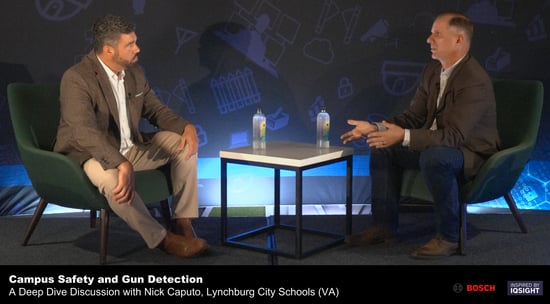
Don't miss the subsequent deep-dive conversation between Nick Caputo and Matt Cirnigliaro about campus safety and gun detection >>
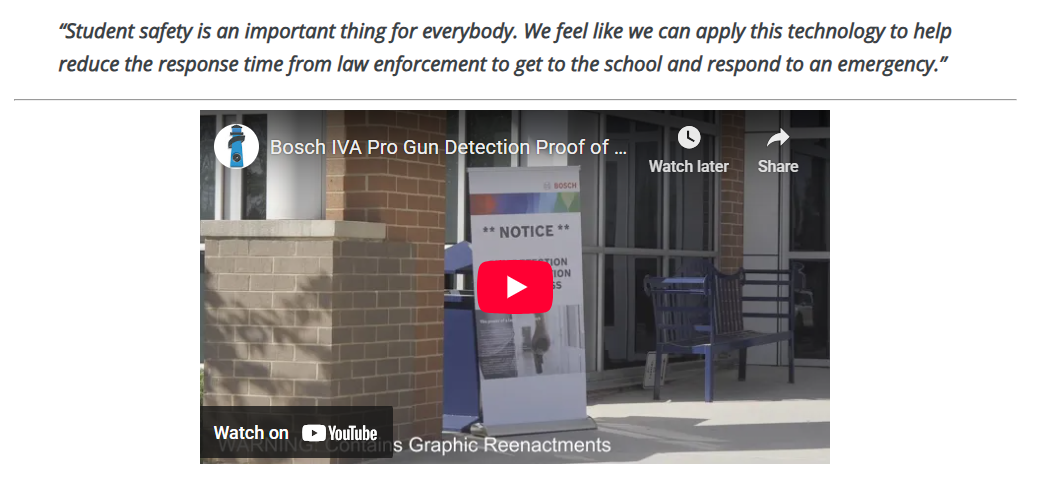
Learn more about Nick's evaluation of gun detection systems >>
Not sure where to start? Contact us for a FREE campus security site survey >>