

Power over Ethernet simplifies the installation of cameras and other network devices by carrying power and data over the same cable. However, selecting the right PoE injector is not always as straightforward as it sounds.
How much power does the device actually require? Will the injector continue operating inside a hot roadside cabinet? What happens when lightning or an electrical surge reaches the site? Will vibration loosen the power connection? Does the injector support the network speed required by the connected device?
These are not merely data sheet questions. Selecting the wrong injector can result in intermittent device failures, unexplained camera reboots, insufficient power, service calls, premature equipment replacement, or complete loss of a critical edge device.
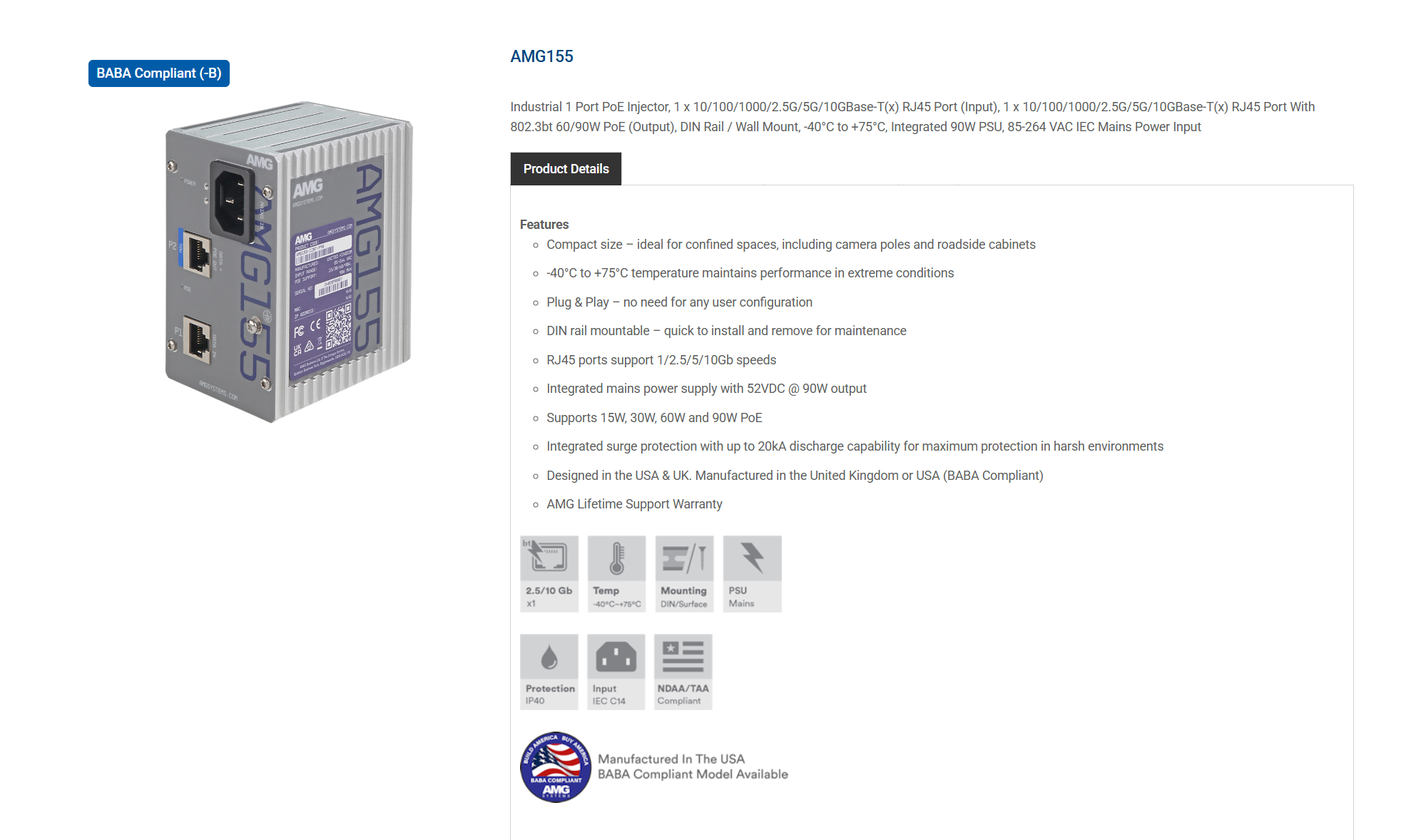
The AMG155 Series is designed to address these problems with a hardened, integrated PoE solution for cameras and other network devices installed in demanding environments.
What problems does the AMG155 industrial PoE injector solve?
The AMG155 helps power cameras and network devices in demanding edge environments. It addresses incorrect PoE power selection, separate external power supplies, electrical surges, extreme temperatures, vibration, limited enclosure space, insecure power connections, and insufficient network speed. Models are available for different PoE power and bandwidth requirements.
Below, Tom Fontana and Dave Sinise explore the benefits of choosing the AMG155 as your organization's go-to PoE injector solution...
Challenge 1: Determining How Much PoE Power Is Actually Needed
One of the most common design problems is matching the injector to the power requirements of the connected device.
A fixed camera may require considerably less power than a PTZ camera equipped with heaters, blowers, illuminators, or other accessories. Devices using IEEE 802.3at PoE+ may have different requirements than equipment designed for IEEE 802.3bt high-power PoE.
The AMG155 family offers models supporting 30, 60, or 90 watts of PoE power. This allows the designer to select an injector based on the actual device requirement instead of trying to make one power level work for every application.
The benefit is not simply having several models available. It is being able to provide the appropriate power budget without under sizing the injector or unnecessarily overengineering the installation.
Some existing camera systems may also have legacy or manufacturer-specific power requirements. Rather than assuming that every high-powered camera will operate correctly with a standard injector, the camera model and its power requirements should be verified during system design.
Challenge 2: Eliminating Separate Power Supplies and Extra Connections
A traditional edge installation may include an injector, an external power supply, mounting hardware, and multiple power connections. Every additional device and connection consumes enclosure space and introduces another potential point of failure.
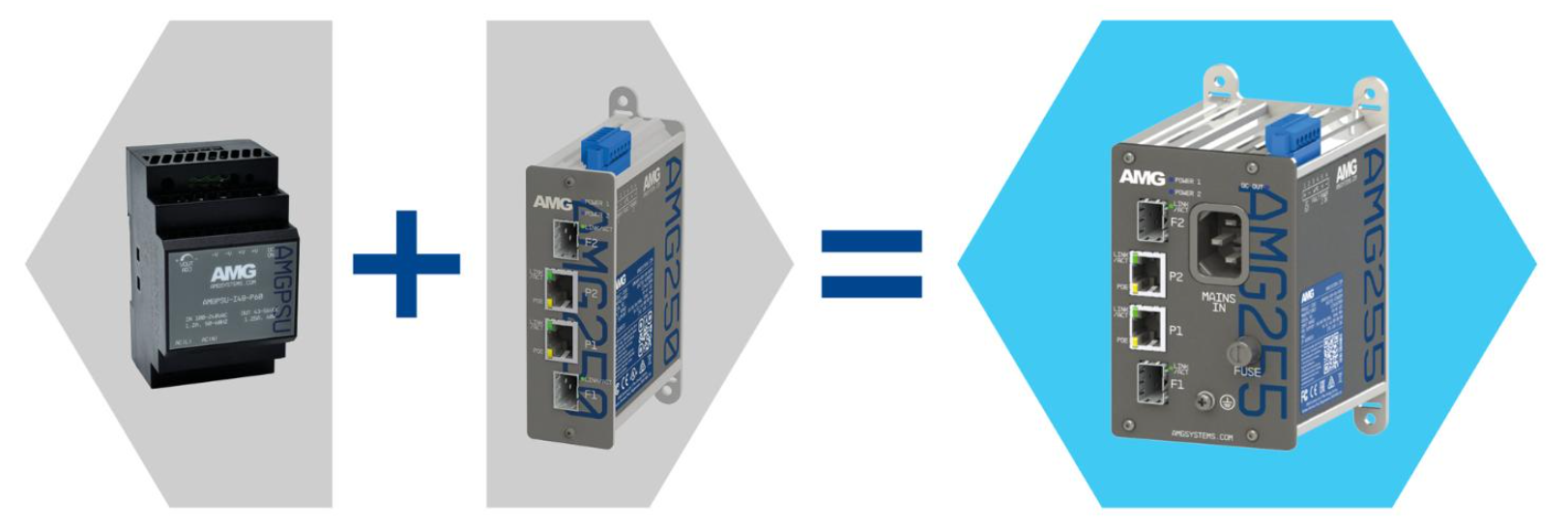
The AMG155 incorporates an industrial mains power supply directly into the injector.
For the installer, that means fewer individual components to purchase, mount, wire, and troubleshoot. Instead of combining a PoE injector with a separate external power supply, the AMG155 provides an integrated device that can be connected to the available AC power source.
This approach can be particularly valuable inside traffic cabinets, camera poles, bridge installations, and other enclosures where mounting space is limited.
Fewer components also simplify future service. A technician investigating a power problem has fewer devices and interconnections to inspect before identifying the cause.
Challenge 3: Protecting Remote Cameras from Surges
Many PoE-powered devices are installed at the physical edge of the network, where electrical conditions are often less controlled than they are inside a building.
Cameras mounted on poles, bridges, roadways, parking areas, and exposed structures may be vulnerable to lightning-related events and other electrical surges. An injector intended primarily for an office environment may not provide the level of protection required at these locations.
The AMG155 incorporates surge protection on both the incoming power side and the connection leading to the powered device. As Dave Sinise explains in the video, the design uses multiple layers of protection to help prevent an electrical event from reaching and damaging the connected camera.
This does not eliminate the need for proper system grounding or a complete surge-protection strategy. It does, however, place important protection directly at the point where power is being introduced onto the Ethernet connection.
The result is a more resilient edge-power architecture and a reduced likelihood that a single electrical event will damage both the injector and the connected device.
Challenge 4: Maintaining Operation in Extreme Temperatures
Roadside cabinets and outdoor enclosures can experience temperatures far beyond those found in a conditioned building.
A cabinet exposed to direct summer sunlight may become considerably hotter than the surrounding air. During winter, the same equipment may be expected to start and operate in subzero conditions.
The AMG155 is hardened for operation across a wide industrial temperature range. In the discussion, Sinise explains that the platform is intended for applications associated with NEMA TS 2 environments and temperatures extending from approximately -40°C to +75°C, depending on the model.
PoE output may derate at the highest operating temperatures, which should be considered when selecting the injector. However, the device is designed to continue providing a substantial amount of usable power rather than unexpectedly shutting down when cabinet temperatures rise.
For system designers, this makes temperature part of the power-budget calculation. A device requiring nearly the injector’s maximum output should be evaluated based on the power available at the expected cabinet temperature, not only at room temperature.
Challenge 5: Preventing Vibration from Disconnecting Power
Vibration is another problem that is easy to overlook during design.
Equipment installed near highways, on bridges, in transit applications, or inside roadside cabinets may be exposed to continuous vibration. Over time, an ordinary power cord may loosen or work its way out of the receptacle.
The AMG155 can be supplied with a locking power cord designed to remain secured to the injector. The right-angle connection also helps manage the cord in confined spaces, while the locking mechanism helps prevent vibration from interrupting power to the camera.
This is a relatively small design detail with a significant operational benefit: the camera remains powered because its injector has not vibrated loose.
Challenge 6: Finding a Practical Mounting Method
No two edge enclosures are exactly the same. Some contain DIN rail, while others require equipment to be secured directly to a wall or mounting plate. In some cabinets, drilling additional holes may be inconvenient or undesirable.
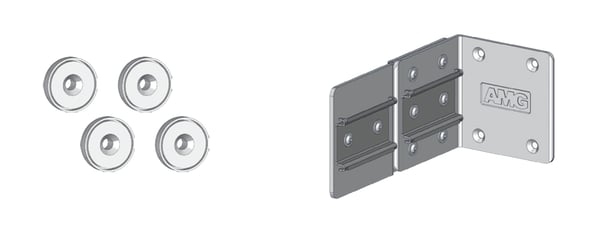
The AMG155 includes DIN-rail and wall-mounting provisions, giving installers more than one way to secure the unit. Magnetic mounting kits are also available for applications where the injector needs to be attached to a suitable metal surface.
These options help the installer work with the available enclosure rather than redesigning the enclosure around the injector.
The locking power connection, compact housing, and flexible mounting options are especially valuable where installation space is limited and future access may be difficult.
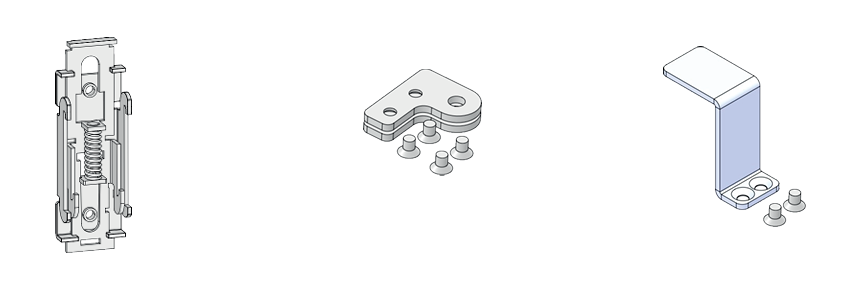
Optional mounting solutions:
Challenge 7: Supporting the Required Network Speed
Power is only one side of the PoE equation. The injector must also pass the Ethernet connection without becoming a bottleneck.
Depending on the selected model, the AMG155 family can support standard Gigabit Ethernet or multigigabit connections up to 10Gbps. This allows the injector to be matched to the bandwidth requirements of the connected camera or network device.
Many surveillance cameras will not require a 10Gbps connection. However, higher-speed models provide an option for specialized devices, aggregated applications, or projects where the network architecture must support additional future capacity.
The goal is not to specify the fastest model in every installation. It is to ensure that the injector does not limit the performance of the device it is powering.
Challenge 8: Reducing Installation-Day Surprises
A product may meet the technical requirements of a project and still create problems if essential accessories are missing when the installer opens the box.
The AMG155 is supplied with the mounting and power components required for a typical installation, including DIN-rail mounting provisions, wall-mounting capability, and a power cord. Optional locking cords and magnetic mounting kits can be selected when the environment requires them.
Providing these installation options helps reduce last-minute hardware purchases, improvised mounting methods, and additional trips to the site.
Built for the Lifecycle of the Installation
Edge equipment is frequently installed in locations that are difficult, disruptive, or expensive to revisit. Reliability must therefore be evaluated across the expected lifecycle of the system—not only during initial commissioning.
AMG supports its hardened products with a lifetime warranty.
That warranty reflects the expectation that these devices will operate in environments involving temperature extremes, vibration, electrical disturbances, and continuous service.
The practical benefit is greater confidence that the PoE infrastructure has been designed for the same environment as the camera or network device it supports.
What Should Designers Evaluate Before Selecting an AMG155?
Before specifying an injector, designers should confirm:
- The maximum PoE power required by the connected device
- Whether the device uses IEEE 802.3at, IEEE 802.3bt, or a legacy power implementation
- The required Ethernet connection speed
- The AC power available at the installation location
- The expected minimum and maximum enclosure temperatures
- The available DIN-rail, wall, or magnetic mounting location
- Whether the site is exposed to vibration
- The project’s grounding and surge-protection requirements
- The effect of high-temperature derating on the available PoE output
Evaluating these requirements in advance helps prevent a common problem: selecting an injector that works on the bench but is not suited for the conditions found at the installation site.
A More Complete Approach to Edge Power
The value of the AMG155 is not based on a single specification. Its value comes from addressing several edge-deployment problems within one compact device.
It supplies the appropriate level of PoE power. It eliminates the need for a separate external power supply. It provides integrated surge protection. It supports hardened temperature ranges, secure power connections, flexible mounting, and network speeds appropriate for both common and specialized applications.
For systems installed in roadside cabinets, on bridges, in parking areas, at remote facilities, or in other demanding environments, those capabilities can reduce installation complexity and remove several common failure points.
The result is not simply a cleaner installation. It is a more dependable way to keep critical cameras and network devices powered at the edge.
System Design Assistance
Contact MidChes to review the device requirements, available power, environmental conditions, and mounting constraints for your next edge-networking project.

Frequently Asked Questions
What problems does the AMG155 industrial PoE injector solve?
The AMG155 helps power cameras and network devices in demanding edge environments. It addresses incorrect PoE power selection, separate external power supplies, electrical surges, extreme temperatures, vibration, limited enclosure space, insecure power connections, and insufficient network speed. Models are available for different PoE power and bandwidth requirements.
What is the AMG155?
The AMG155 is an industrial Power over Ethernet injector used to add PoE power to an Ethernet connection. It is designed for cameras and other network devices installed in demanding edge environments.
What customer problem does a PoE injector solve?
A PoE injector allows power and network data to be delivered over the Ethernet connection when the existing network switch does not provide PoE or does not provide enough PoE power for the connected device.
How much PoE power can the AMG155 provide?
The AMG155 family includes models designed for 30-watt, 60-watt, and 90-watt PoE applications. The correct model depends on the maximum power required by the connected device.
Does every high-powered camera require a 90-watt injector?
No. The required injector should be selected according to the camera’s maximum power consumption and supported PoE standard. Heaters, blowers, illuminators, motors, and other accessories may increase the camera’s power requirement.
Why is an integrated power supply beneficial?
An integrated mains power supply eliminates the need to mount and connect a separate external power supply. This reduces the number of components, saves enclosure space, and removes potential points of failure.
Can the AMG155 be used in roadside cabinets?
The hardened design, broad operating-temperature range, surge protection, compact housing, and mounting options make it suitable for consideration in roadside and other industrial edge installations. The complete installation must still meet the project’s enclosure, grounding, environmental, and electrical requirements.
Does the AMG155 protect a camera from lightning?
The injector includes surge-protection features intended to reduce the risk posed by electrical surges. It should be used as part of a properly engineered grounding and surge-protection strategy rather than treated as a substitute for the complete strategy.
Why does temperature derating matter for PoE?
Some power supplies provide less output at very high temperatures. Designers should verify that the injector can still provide enough power for the connected device at the highest anticipated cabinet temperature.
How can vibration affect a PoE installation?
Vibration can loosen an ordinary power connection over time. A locking power cord helps prevent the injector from becoming disconnected in roadside, bridge, transit, and other vibration-prone applications.
How can the AMG155 be mounted?
The platform supports DIN-rail and wall mounting. Optional magnetic mounting kits may also be used where an appropriate metal mounting surface is available.
Does a PoE injector affect network speed?
It can if the injector does not support the bandwidth required by the device. AMG155 models are available for standard Gigabit and higher-speed multigigabit applications, depending on the selected model.
Does the AMG155 require configuration?
The injector is intended to operate as a plug-and-play device. The designer must still select the correct model, power level, network speed, mounting method, and accessories.
Can the AMG155 power legacy cameras?
Some legacy cameras use manufacturer-specific or earlier high-power implementations. Compatibility should be confirmed using the exact camera model and its documented power requirements before an injector is selected.
What comes with the AMG155?
Typical installation provisions include the power connection and hardware for DIN-rail or wall mounting. Optional accessories, such as locking power cords and magnetic mounting kits, can be selected for particular environments.
What applications are appropriate for the AMG155?
Potential applications include surveillance cameras, roadway and traffic systems, bridge installations, parking facilities, remote industrial sites, outdoor network devices, and equipment installed inside environmentally demanding cabinets.